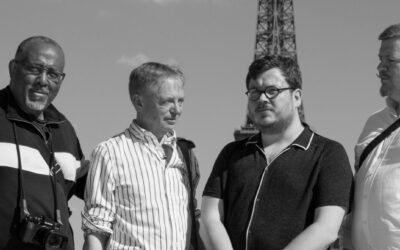
As a Corporate Magician in London, I can tell you that some evenings remind me why I do this job. Specifically, savagely wonderful Friday evenings on Great Queen Street in Central London.
On Friday 22nd May, I was honoured to perform for the Savage Club House Dinner — as a guest, as a performer, and, if the application goes the way I hope, as a prospective brother. The dinner took place at Freemasons’ Hall on Great Queen Street, one of those rooms that does not need you to tell people it is impressive. They can see that for themselves.
The Savage Club

For the uninitiated: The Savage Club is one of London’s great bohemian institutions, founded in 1857 and counting artists, writers, musicians, lawyers, and performers among its brotherhood across the centuries. Magic has always had a place at the table — David Devant performed for the Savages, and the tradition of inviting magicians to the House Dinner has continued ever since.
There are currently three or four Magic Circle members among the brotherhood, each of whom has performed at a House Dinner in their own right. It is, in that sense, a room that knows its magic — which makes the invitation all the more meaningful. My good friend John Conway, whom many will know from his years as archivist of The Magic Circle, was kind enough to recommend me for the occasion, and I was thoroughly delighted to be invited. I wanted, of course, to ensure I gave them the very best show I possibly could.
Being asked to stand in that lineage is not something you take for granted.
One of the things that struck me most about the evening was the warmth and egalitarianism of the room. There were a great many influential people present — barristers, judges, reverends, writers, musicians — and yet the atmosphere could not have been further from the self-important. No matter whether you were a High Court judge or a lowly magician, everyone treated everyone else as equals. It was, quite genuinely, a delight.
27 Great Queen Street: The Club's Home
We gathered first at the club’s premises at 27 Great Queen Street for drinks before making our way across to Freemasons’ Hall for dinner. The Savage Club relocated here from the National Liberal Club, and while the address may be new, the club has made it thoroughly and unmistakably their own.
The premises are wonderfully appointed — a fully fitted bar, a morning room, a business centre, and the kind of easy, welcoming atmosphere that is very difficult to manufacture and very easy to recognise. I have been fortunate enough to visit several times as a guest, and it never disappoints. Whoever you happen to find yourself talking to, you can be quite certain of good conversation and pleasant company. Everyone there is friendly, genuinely interested, and generous with their time. It is, in the best sense, a proper club.
Beyond the House Dinner, the Savages also host a monthly club lunch, at which there is usually a guest speaker. The range of subjects covered is wonderfully eclectic — I have had the pleasure of attending talks on everything from dentistry to the life of a film extra, and both were fascinating. That breadth of curiosity is very much in the spirit of the club.
The Evening
Brother Savage Oliver Lynch chaired the evening with considerable charm, opening with Grace before a fantastic three-course meal that did not put a foot wrong: a marbled chicken and duck terrine, twelve-hour Hampshire pork, and a baked lemon tart to finish.
Then came the choruses.
If you have never been in a room full of Savages singing My Old Man, Doing the Lambeth Walk, and Oh I Do Like to Be Beside the Seaside — loudly, collectively, and with total conviction — then you have not yet experienced what a dining room sounds like when everyone in it has entirely committed to the moment.
The session closed, as I am told it always does, with the club’s own anthem: If You Were the Only Girl in the World, sung with the kind of warmth and sincerity that only a room full of people who genuinely mean it can produce. It was genuinely wonderful. The kind of atmosphere that no corporate entertainment brief has ever successfully specified, but every good event organiser quietly hopes for.
The Performance
After the choruses, it was my turn.
I will admit that I was anxious for them to enjoy their evening. This was a room that knew good entertainment, appreciated it, and had a history of being entertained by some of the finest performers in the world.
I needn’t have worried. From the first moment, they were warm, engaged, and thoroughly game — exactly the kind of audience that makes performing magic a genuine pleasure rather than a task.
I kept the set to fifteen minutes — the right length for a post-dinner room that has already been well-entertained and well-fed.
My set opened with a torn and restored newspaper (a New York Times liberated from a first-class lounge on a recent trip to France), before moving into a card routine for which I invited two volunteers to assist.
One was a High Court judge. The other, a vicar. A rather fine sample of the membership of this wonderful establishment, and, as Brother Savage John Elliott later noted in his email, proof that “you can’t trust anybody.”
A silken favourite followed, a piece involving an egg and a glass that has a pleasing way of making people question what they thought they just saw.
Then the finale: a mentalism routine involving the entire room, built from nothing more than numbers called out at random by the audience, which resolved into something so specific and so fitting that the room did not quite know whether to applaud or look around suspiciously. So they did rather a lot of both.
Perhaps though, my favourite moment of the entire evening came during the card routine, when I threw an invisible card out into the audience to arc over their heads and magically land in the vicar’s pocket.
As it passed over the room, every single person ducked… to avoid being struck by a flying card… that was invisible.
There is something rather wonderful about a room full of barristers, judges, policemen, artists, musicians, scientsist and reverends collectively ducking out of the way of, well, nothing whatsoever, and then laughing at themselves for doing it. That, in a nutshell, is what good magic does to a room.
During the interval and at the close of the evening, I received a number of very kind comments, not only about the strength of the performance and how genuinely bewildering the magic had been, but about the performance style itself: how comfortable I made people feel, and how much they had enjoyed being part of it. I was quite pleased with that. It is, ultimately I believe, the thing that matters most.
Following my performnce, the chairman’s closing remark, delivered with immaculate timing, was that
“while we prepare a stake to tie the magician to and burn him alive, we shall take a five-minute interval.”
I have had many responses to my work over the years. That one sits near the top.
Why the Architecture of an Event Matters
I spend a good portion of my working life as a corporate magician and event host — managing rooms for conferences, awards evenings, networking events, and trade shows across London, Essex, and Kent. Returning from an evening like this, I am always struck by how much the structural shape of an event determines its energy.
The Savage Club House Dinner works because it has architecture. Drinks, then dinner, then communal singing, then performance, then music. Each section earns the next. Nobody is watching the clock. Nobody is checking their phone. The room is entirely present, which is the rarest and most valuable thing you can achieve at any event — corporate or otherwise.
The best corporate entertainment does not feel like an interruption. It feels like a natural extension of the evening.
After the magic came Hendo’s Washboard Kings — a seven-piece jazz ensemble made up entirely of brothers Savage, who had sat with us at dinner before producing instruments and playing with the kind of looseness that only comes from people who genuinely enjoy what they are doing. It was a perfect ending. Nobody wanted to leave.
Following the close of the eveninigs proceedings, 60 Savages, and myself, went back across the road to the club, and as a result of good company and excellent conversation, I stayed rather longer than I had planned.
Hiring a Corporate Magician in London
If you are an event organiser asking the question “should I hire a corporate magician?” your corporate dinner, awards evening, or networking event, consider what happened in that room on Friday night.
A group of highly intelligent, professionally accomplished, and, by their own admission, somewhat sceptical people spent fifteen minutes utterly absorbed in magic. They ducked out of the way of an invisible card. They looked around the room in genuine bewilderment at the finale, and they left talking about it. They still are.
If a corporate magician in London can do that to a room full of Savages, imagine what he could do for your clients, your stakeholders, and the message you are trying to leave them with. Magic, used well, is not a novelty. It is a tool for creating moments that people carry with them long after the evening is over.
What does a magician actually bring to a corporate event? Engagement, energy, and a shared experience that no PowerPoint slide has ever managed to replicate. Whether you are looking for a corporate magician in Essex, an after-dinner performer in London, or an event host who can manage the flow of an entire evening, the principle is the same: the right entertainment does not just fill time. It defines the occasion.
A Note on the Venue
If you are planning a corporate event in London, Freemasons’ Hall on Great Queen Street in Central London is extraordinary — Grade II* listed, architecturally vast, and somehow still warm when it is full of the right people. When you pair the right room with a well-structured timeline and intelligent entertainment, you get an event that people talk about for months.
Liam Ball - The Gentleman Magician - Corporate host & Magician in London
Liam Ball is the Gentleman Magician. A Member of The Magic Circle, an Associate of the Inner Magic Circle, and has been awarded a Silver Star for excellence in performance. Based in Essex, he works as a corporate magician and event host across London, Kent, and the wider UK — bringing close-up magic, after dinner performance, and professional event hosting to corporate dinners, awards evenings, conferences, and private functions.
To discuss the architecture of your next high-stakes function, connect with Liam here.